Barrels and Benchmarks: The ESG Math American Energy Investors Are Running on Uganda's Oilfields
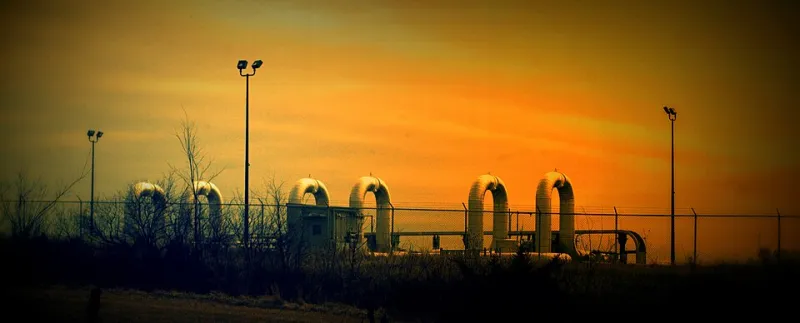
Photo: shannonpatrick17 from Swanton, Nebraska, U.S.A., CC BY 2.0, via Wikimedia Commons
For an energy investor in Houston or Denver, the arithmetic on Uganda is no longer hypothetical. Two upstream developments in the Albertine Graben — the Tilenga project operated by TotalEnergies and Kingfisher, run by CNOOC — have moved from construction into late-stage commissioning, with the 1,443-kilometer East African Crude Oil Pipeline running from Kabaale in Hoima to the Tanzanian port of Tanga as the corridor that makes the whole enterprise bankable. Recoverable reserves are commonly estimated at roughly 1.4 billion barrels out of several billion in place. The numbers are real, the first cargoes are close, and the question American institutions now face is not whether Uganda will export crude but how they will justify owning any part of it.
The Carbon Intensity Argument
Uganda's pitch is unusually technical, and it deserves a fair hearing. The upstream facilities were designed without routine flaring, the field operations are substantially electrified, and the export pipeline is electrically heat-traced — a costly engineering choice that keeps the waxy crude moving at temperature without diluting it with lighter hydrocarbons. Project sponsors have consistently placed upstream breakevens in the high teens to low twenties per barrel, competitive with a great deal of what is drilled in the Permian.
Translated into the language of an ESG mandate, the claim is that Uganda offers a low carbon-intensity barrel in a world that still consumes roughly 100 million barrels a day and will keep consuming a large share of it for years. For an allocator managing a global energy transition pathway rather than a divestment pledge, that is a coherent thesis. Intensity, not existence, becomes the test.
Where the Playbook Breaks
The counterargument is not really about engineering. It is about measurement. European and American frameworks have moved decisively toward absolute emissions and financed-emissions accounting. A lender or limited partner reporting under the Partnership for Carbon Accounting Financials cannot easily explain why a new barrel counts for less than an old one, and most climate disclosure regimes still treat expansion of fossil fuel capacity as a category problem rather than a unit-by-unit one.
That mismatch explains the financing pattern that has emerged. Several European banks and insurers, under sustained pressure from advocacy campaigns organized around the pipeline corridor, declined to participate. Continental institutions and African development finance stepped into the gap. The result is a capital stack that looks structurally different from comparable projects in the Gulf of Mexico or the North Sea — less European commercial bank participation, more African institutional and export-credit involvement, and a heavier reliance on pre-export finance arrangements.
For an American investor, this creates an odd situation. The asset has been de-risked on construction and largely financed without them. What remains is a question of whether to buy in on the secondary market, provide later-stage capital, or stay out entirely.
Biodiversity, Land, and the Reputational Ledger
No honest assessment can ignore the environmental objections. A portion of Tilenga's well pads sits within or immediately adjacent to a protected area, and the pipeline's route across Uganda and Tanzania has drawn sustained attention from conservation groups focused on water crossings, displacement, and habitat fragmentation. Sponsors point to resettlement programs, biodiversity action plans, and strict operating standards inside the park boundary. Critics argue that those mitigations, however well executed, cannot resolve the underlying land-use conflict.
This is where American institutional behavior diverges by mandate type. University endowments and public pension funds with active student or member constituencies have largely treated the reputational risk as dispositive. Family offices and specialist energy funds with commodity exposure have treated it as a pricing input. Both are behaving rationally given their governing documents.
What a Responsible-Extraction Model Would Require
If Uganda's oil sector is to become a credible template for African extraction rather than a cautionary tale, three things matter more than any single ESG rating.
First, transparency of payments. Uganda's participation in the Extractive Industries Transparency Initiative and the disclosure requirements now imposed by several home jurisdictions give outside investors a way to verify revenue flows. That is a meaningful improvement over the previous decade of African upstream deals.
Second, in-country value. The refinery at Kabaale, the Ugandan National Oil Company's carried interest, and local content requirements are designed to keep more of the value chain inside the country than the traditional export-only model allowed. Whether those provisions survive contact with cost overruns is an open question, but the intent is legible.
Third, and least discussed in American boardrooms, the carbon accounting must be auditable. Third-party verification of flaring volumes, methane leakage, and pipeline energy consumption is the difference between a defensible intensity claim and marketing. Sponsors who publish verified figures will find a more receptive audience among US allocators than those who publish assertions.
The Trade the Americans Are Actually Making
Strip away the rhetoric and American capital is being asked a straightforward question: does the energy transition permit new supply from frontier basins if that supply is cleaner than the marginal barrel it displaces? Uganda's project sponsors say yes, and they have built the infrastructure to prove it on intensity. The ESG frameworks most US institutions report against say, in effect, not yet.
That gap will not close quickly. In the meantime, expect the interesting activity to happen away from headline equity — in offtake-linked financing, in services and logistics contracts held by firms with less reputational exposure, and in second-order industrial development around the refinery and the Kabaale industrial park. That is where the American entrepreneurial presence in Uganda's oil economy is most likely to be felt, quietly, and where the argument over responsible extraction will actually be settled.
For Eagle Uganda's readers, the practical takeaway is this: Uganda's oil is not a moral fable. It is a capital-allocation problem with unusually clear engineering parameters and unusually contested accounting rules. Investors who can hold both facts at once will find the market legible. Those who cannot will keep reading headlines instead of flow rates.