Prescription for Change: Why Uganda's Generic Drug Makers Could Be America's Most Overlooked Healthcare Ally
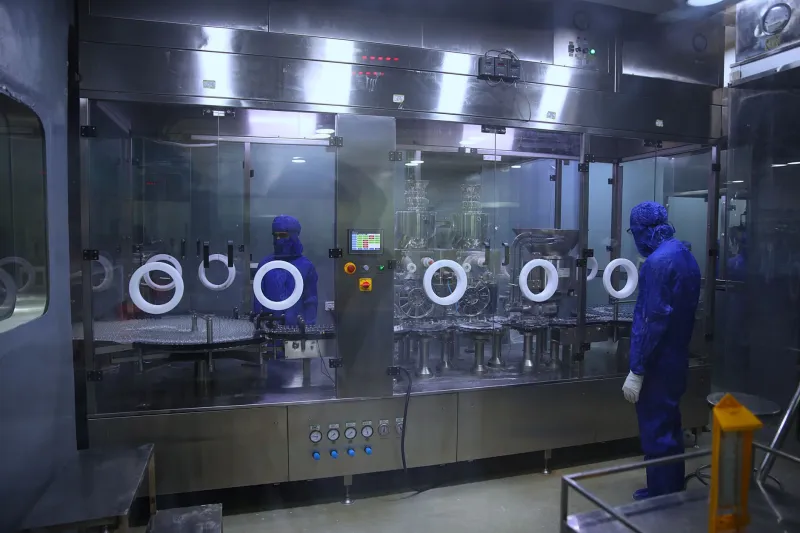
When American pharmacists flag a drug as unavailable, the conversation rarely turns to Kampala. Yet in laboratories and production facilities scattered across Uganda's industrial corridors, a generation of pharmaceutical manufacturers is methodically building the kind of regulatory credibility and production capacity that could, within a decade, make that conversation entirely plausible.
The United States is living through a prolonged generic drug shortage crisis. According to the American Society of Health-System Pharmacists, hundreds of medications remain in short supply at any given moment—ranging from basic antibiotics to oncology drugs and anesthetics. The causes are structural: heavy dependence on a narrow band of suppliers in India and China, razor-thin profit margins that discourage domestic production, and a procurement model that has long prioritized cost over supply chain resilience. Each of these vulnerabilities has been exposed repeatedly, most dramatically during the COVID-19 pandemic and, more recently, amid escalating trade tensions with Beijing.
Into that gap, Uganda is beginning to step forward—quietly, methodically, and with growing institutional backing.
Building Credibility, One Certification at a Time
The foundation of Uganda's pharmaceutical ambitions rests on regulatory legitimacy. Over the past several years, a handful of Ugandan manufacturers have pursued and obtained World Health Organization (WHO) Good Manufacturing Practice (GMP) prequalification—a benchmark that signals to international procurement agencies that a facility meets globally accepted standards for drug safety and quality control.
Naluflex Pharmaceuticals and Quality Chemicals Industries Limited (QCIL), the latter now operating as Cipla Quality Chemical Industries, represent the sector's most visible success stories. QCIL, a joint venture with Indian pharmaceutical giant Cipla, has been supplying WHO-prequalified antiretroviral drugs and antimalarials to African markets for years. Its Kampala facility is widely regarded as one of the most sophisticated pharmaceutical manufacturing sites on the continent.
But the ambition does not stop at continental markets. Industry executives and government officials in Kampala have begun articulating a longer-term objective: FDA registration. Achieving that designation would, in theory, open the door to the United States market—the largest pharmaceutical market on earth, valued at over $600 billion annually.
The path is neither short nor simple. FDA registration requires extensive documentation, facility inspections conducted by American regulators on Ugandan soil, and demonstrated compliance with Current Good Manufacturing Practice (cGMP) standards that exceed even WHO benchmarks in several respects. For manufacturers operating in a country where reliable electricity, purified water infrastructure, and cold-chain logistics remain intermittent challenges, the investment required is substantial.
The Geopolitical Opening
What makes Uganda's ambitions more than aspirational is the shifting geopolitical landscape reshaping American pharmaceutical procurement. Washington's unease with its dependence on Chinese active pharmaceutical ingredients (APIs)—the chemical building blocks from which most generic drugs are assembled—has translated into legislative momentum. The BIOSECURE Act, under active discussion in Congress, reflects a broader bipartisan appetite to diversify the origins of America's drug supply.
India, currently the dominant supplier of finished generic drugs to the US, is also under increasing scrutiny. FDA inspection data has documented recurring compliance failures at Indian facilities, and supply disruptions have periodically rattled American hospital systems. The result is a procurement environment in which American buyers—government agencies, hospital networks, and pharmacy benefit managers—are at least theoretically open to alternative sourcing relationships that they would not have considered five years ago.
Uganda's advocates argue that the country offers a combination of advantages that deserve serious evaluation: an English-speaking regulatory environment aligned with British pharmaceutical standards, a young and trainable scientific workforce, competitive labor costs, and a government that has identified pharmaceutical manufacturing as a strategic priority under its National Development Plan.
The Uganda Industrial Research Institute and the National Drug Authority have both been tasked with accelerating the sector's technical upgrading. External financing from the African Development Bank and the European Union has begun flowing into facility improvements and workforce training programs designed explicitly to close the gap between current Ugandan manufacturing standards and FDA requirements.
What the Numbers Reveal
Uganda currently imports an estimated 80 percent of the medicines consumed domestically—a figure that simultaneously underscores the sector's immaturity and the scale of the opportunity ahead. Local manufacturers supply primarily lower-complexity generics: oral rehydration salts, analgesics, basic antibiotics, and antimalarials. The more technically demanding drug categories—injectables, biologics, and specialty generics—remain almost entirely imported.
For American procurement purposes, it is precisely the simpler, high-volume generics where Uganda could realistically compete in the near term. Amoxicillin, metformin, and common antihypertensives are exactly the categories that appear most frequently on American drug shortage lists, and they are also within the technical reach of manufacturers that have already achieved WHO prequalification.
The economic arithmetic is not straightforward, however. Ugandan manufacturers currently lack the scale to compete on pure price with established Indian and Chinese suppliers. Shipping costs from East Africa to American ports add a logistical premium that Indian competitors, with their established freight relationships and larger production volumes, do not face. And American generic drug pricing, already compressed by aggressive pharmacy benefit manager negotiations, leaves limited room for a cost-premium justified by supply chain diversification.
The Barriers That Remain
Beyond cost and logistics, the structural barriers to Ugandan pharmaceutical exports reaching American consumers are formidable. FDA facility registration alone can take three to five years and cost millions of dollars—a timeline and capital requirement that strains even well-capitalized manufacturers. American pharmaceutical distributors and hospital group purchasing organizations operate within procurement frameworks that favor established supplier relationships and domestic regulatory familiarity.
There is also the challenge of perception. Uganda, for most American healthcare executives, does not register as a pharmaceutical origin country. Overcoming that unfamiliarity requires not only regulatory achievement but sustained diplomatic and commercial engagement—the kind of market-building investment that requires coordinated effort between Ugandan manufacturers, the government in Kampala, and diaspora networks in the United States.
The Ugandan government has taken some steps in this direction, engaging with the US Trade Representative's office and exploring preferential trade arrangements that could ease market access. The African Growth and Opportunity Act (AGOA), under which Uganda already qualifies for duty-free exports in several product categories, does not currently extend to pharmaceutical products—a gap that industry advocates on both sides of the Atlantic have identified as a policy priority worth addressing.
A Long Game Worth Playing
None of this suggests that Ugandan-made generics will appear on American pharmacy shelves in the immediate future. The regulatory, logistical, and commercial obstacles are real, and the timeline for overcoming them is measured in years rather than months.
What is changing, however, is the strategic calculus on the American side. A healthcare system that has watched drug shortages become a chronic condition, and a political establishment increasingly alert to the risks of concentrated pharmaceutical supply chains, may find itself more receptive to East African alternatives than its procurement history would suggest.
For Uganda, the pharmaceutical sector represents something rarer than a business opportunity—it represents a chance to insert itself into a global supply chain where reliability and regulatory trust matter as much as price. The manufacturers in Kampala who are investing in FDA-aligned infrastructure today are making a bet that American buyers will eventually prioritize resilience over familiarity.
Given what the past five years have revealed about the fragility of concentrated supply chains, that bet looks less speculative by the day.


