From Kampala to Silicon Valley: How Uganda's Mobile Money Ecosystem Is Rewriting the Rules of Financial Inclusion
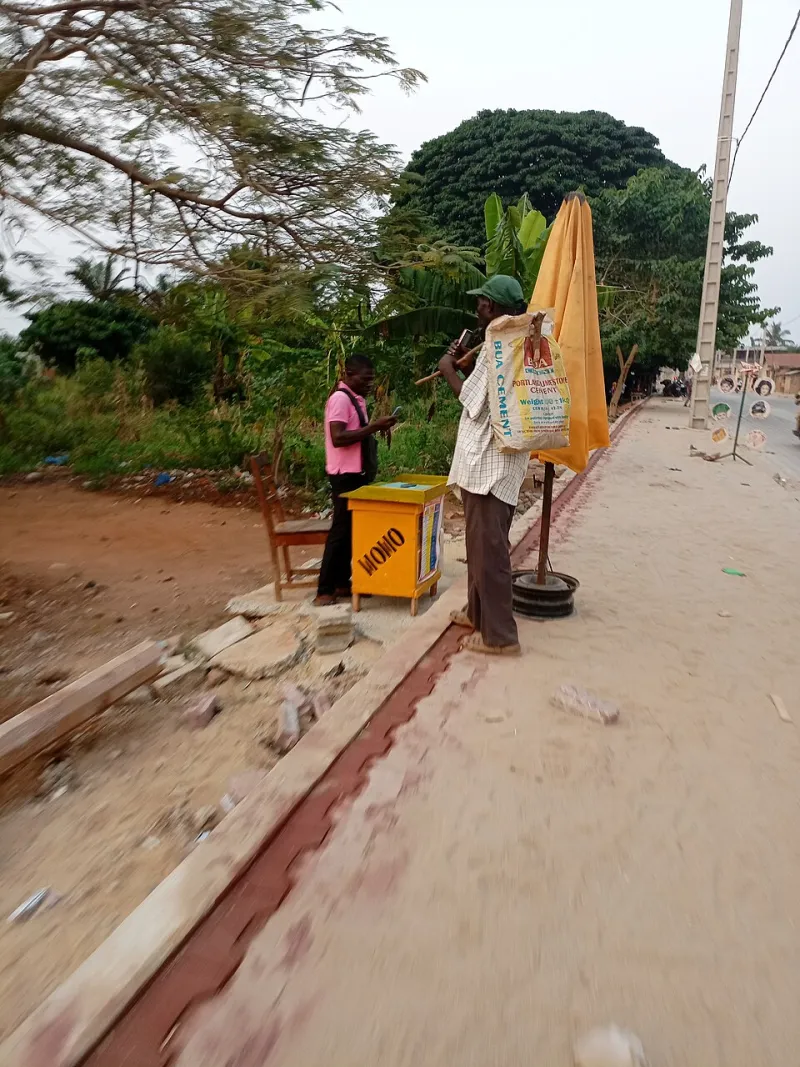
Photo: Saliousoft, CC BY-SA 4.0, via Wikimedia Commons
In the spring of 2023, a delegation of American fintech executives landed at Entebbe International Airport not to pitch a product, but to study one. Their destination was not a gleaming tech campus or a government ministry. It was a market stall in Kampala's Owino district, where a textile vendor named Grace Namutebi conducted her entire day's business — buying stock, paying suppliers, and transferring profits to her savings — without ever touching a bank.
Her tool of choice was a mobile phone. Her financial institution was a SIM card.
This scene, replicated millions of times daily across Uganda, encapsulates why the country has become an unlikely reference point for financial engineers from San Francisco to Singapore. Uganda's mobile money ecosystem has not simply expanded access to financial services. It has reconstructed the very architecture of economic participation for a population where fewer than 20 percent hold traditional bank accounts.
A Market Born From Necessity
Uganda's mobile money story did not begin with venture capital or a government mandate. It began with geography and frustration. A country where rural communities are separated from the nearest bank branch by hours of unpaved road, Uganda presented a structural problem that conventional banking was never designed to solve.
MTN Uganda launched MTN Mobile Money in 2009, followed shortly by Airtel Money. Within a decade, these two platforms had enrolled more registered mobile money accounts than the entire formal banking sector had accumulated in its history. By 2023, the Bank of Uganda reported that mobile money transactions exceeded 140 trillion Ugandan shillings annually — a figure that represents not a supplement to the formal economy, but an economy unto itself.
The implications extend well beyond convenience. Mobile money has functioned as a de facto credit history builder, a savings mechanism, and a business payment rail for entrepreneurs who were previously invisible to the financial system. Small-scale farmers in Mbale can now receive payment for their harvest within minutes of delivery. Bodaboda (motorcycle taxi) operators in Gulu settle daily earnings digitally, building transaction records that increasingly serve as collateral for microloans.
The Regulatory Genius the World Overlooked
Perhaps the most transferable lesson Uganda offers is not technological — it is regulatory. The Bank of Uganda adopted an approach that American policymakers have debated for years without resolution: a tiered know-your-customer framework that allows low-value accounts to be opened with minimal documentation while applying stricter scrutiny to higher-value transactions.
This proportionality principle enabled mass adoption without sacrificing systemic security. New users could register with nothing more than a national identification number, while merchants processing larger volumes faced enhanced compliance requirements. The model effectively disaggregated risk rather than applying a blanket standard that would have priced the poorest users out of the system entirely.
For US fintech companies navigating the tension between regulatory compliance and market accessibility — particularly in underserved domestic communities — Uganda's graduated framework offers a working prototype. Companies like Chime and Cash App have explored similar tiered models domestically, but Uganda's decade-long implementation data provides the empirical foundation that American regulators have lacked.
Unlocking the Entrepreneurial Layer
The most consequential outcome of Uganda's mobile money revolution has not been the technology itself, but the secondary economy it has enabled. When a reliable payment rail exists at the grassroots level, entrepreneurs build upon it.
Agrovet businesses in western Uganda now offer buy-now, pay-at-harvest financing to smallholder farmers through mobile money-linked credit products. Digital savings groups, known locally as mobile VSLAs (Village Savings and Loan Associations), pool contributions from dozens of members across multiple districts — a structure that was logistically impossible before digital payment infrastructure existed.
More significantly, a generation of Ugandan technology startups has emerged to build services on top of the mobile money layer rather than alongside it. Companies such as Numida, which provides working capital loans to micro-merchants using mobile money transaction data as a credit proxy, and Yo Uganda Limited, one of Africa's earliest mobile money API providers, demonstrate that the infrastructure has matured sufficiently to support a genuine technology stack.
For American investors, this layered ecosystem represents a compounding opportunity. Entry points exist not only at the platform level — where MTN and Airtel remain dominant — but across the application layer, the data analytics layer, and the financial products layer that sits above the payment rails.
What US Companies Are Getting Wrong
Despite growing interest, many American firms approaching Uganda's mobile money market make a consistent error: they arrive with solutions rather than questions. The assumption that a product validated in Lagos or Nairobi will translate seamlessly to Kampala reflects a failure to appreciate the distinct characteristics of Uganda's market.
Uganda's mobile money users demonstrate notably higher rates of agent-assisted transactions compared to fully self-service models prevalent in Kenya. This reflects both infrastructure realities and cultural preferences for human intermediaries in financial interactions. Companies that have invested in robust agent networks — training, incentivizing, and geographically distributing human touchpoints — have consistently outperformed those relying on purely digital acquisition funnels.
The lesson for American entrants is counterintuitive in an era of automation: in Uganda's mobile money ecosystem, the human layer is not a cost to be engineered away. It is a competitive advantage.
A Blueprint, Not a Template
Uganda's mobile money model will not transplant wholesale to any other market. The specific combination of regulatory flexibility, market structure, and demographic profile that enabled its success is not universally replicable. But the underlying principles — graduated compliance, infrastructure-first thinking, and respect for the economic agency of low-income users — are.
As American fintech companies confront the reality that 5.9 million US households remain unbanked and a further 18.7 million are underbanked, according to the FDIC's most recent survey, the impulse to look outward for solutions is understandable. Uganda offers not a mirror of America's challenges, but a genuinely different way of thinking about them.
Grace Namutebi does not know she is a case study. She is simply running her business. But the system that enables her to do so was built with a clarity of purpose that the global fintech industry is only beginning to fully appreciate.
The eagle, after all, does not study flight by watching other eagles. It studies the wind.