Powering Two Continents: How Uganda's Renewable Energy Founders Are Quietly Becoming America's Grid Resilience Partners
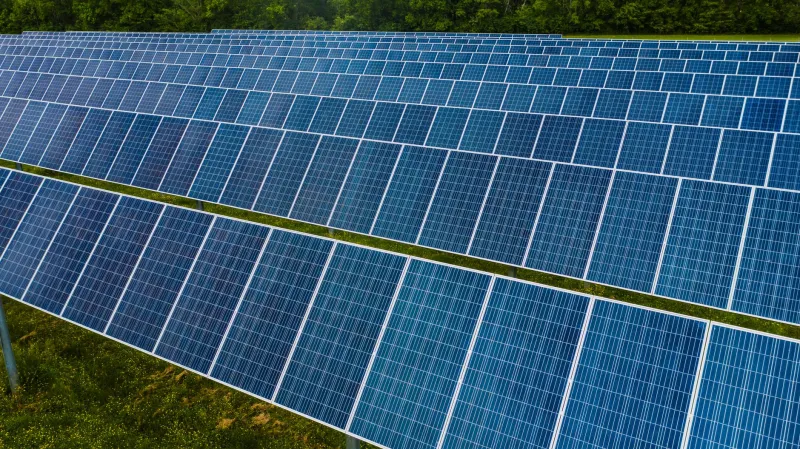
For most of its modern history, Uganda's energy deficit has been framed as a problem to be solved — a drag on economic growth, a barrier to industrialization, and a daily inconvenience for millions of households. Yet something unexpected has emerged from decades of working around unreliable power: a cohort of renewable energy entrepreneurs whose decentralized, low-cost, high-resilience solutions are now drawing serious scrutiny from American utilities, climate-focused investors, and federal energy planners.
The irony is not lost on those watching from Kampala. The same infrastructure gaps that once defined Uganda's energy challenge have become the laboratory conditions producing some of the world's most practical renewable innovations — innovations that American grid managers are now quietly studying as the United States confronts its own vulnerabilities.
The Necessity That Became an Advantage
Uganda's national grid serves fewer than half of its population. In rural areas, that figure drops dramatically. Rather than waiting for centralized infrastructure to arrive, a generation of Ugandan engineers and entrepreneurs built around the gap. They developed miniaturized solar systems capable of powering clinics, schools, and small manufacturers. They engineered micro-hydroelectric installations on fast-moving rivers that required no dam, no reservoir, and no significant environmental disruption. They built pay-as-you-go financing platforms that made clean energy accessible to households earning less than five dollars a day.
These were not theoretical exercises. They were commercial products, deployed at scale, refined through customer feedback, and stress-tested against conditions that would challenge any energy system — irregular rainfall, extreme heat, supply chains that could take months to deliver a replacement component.
The result is a body of practical knowledge about decentralized energy resilience that has very few equivalents anywhere in the world.
Profiles in Power: The Founders Reshaping the Sector
Among the most closely watched ventures is Fenix International, which pioneered the ReadyPay Power system across Uganda before being acquired by ENGIE, the French energy multinational. The Kampala-based operation helped establish a template for mobile-money-linked solar financing that has since been replicated across a dozen African markets. Its data on consumer energy behavior, default rates, and system performance under off-grid conditions represents a dataset that mainstream energy companies are only beginning to appreciate.
Equally notable is the work coming out of Umeme, Uganda's primary electricity distribution company, which has partnered with international developers to pilot smart metering and demand-response technologies in Kampala neighborhoods. The lessons from those pilots — about consumer behavior, meter tampering prevention, and load balancing in low-density grids — have direct applications for American rural electric cooperatives struggling with aging infrastructure and rising demand from electric vehicles.
Smaller ventures are also making their mark. Renewvia Energy, which has developed solar microgrids serving Ugandan island communities on Lake Victoria, has begun conversations with Caribbean and Pacific Island utilities — conversations that are increasingly drawing in American federal agencies interested in resilient power solutions for US territories.
Why American Utilities Are Paying Attention
The United States spent much of the past two decades exporting its energy expertise to the developing world. The dynamic is quietly shifting. Following the 2021 Texas grid failure, the prolonged outages caused by hurricanes in Puerto Rico, and the growing frequency of wildfire-related blackouts in California, American grid planners have been forced to confront an uncomfortable reality: centralized power infrastructure is fragile in ways that decentralized systems are not.
Ugandan entrepreneurs have been solving for exactly this kind of fragility for twenty years.
The US Department of Energy's Office of Electricity has increased funding for microgrid research and demonstration projects. Several of those projects are being designed in consultation with African energy developers who have deployed microgrids at a scale and speed that American pilots have rarely matched. The African Development Bank and the US International Development Finance Corporation have jointly funded feasibility studies that are, in effect, technology transfers running in reverse — from Kampala to Kansas City, from Jinja to Jacksonville.
American climate investors have noticed as well. Funds including Breakthrough Energy Ventures and Congruent Ventures have expanded their Africa mandates, not purely for philanthropic reasons, but because the commercial models being validated in Uganda represent replicable infrastructure plays with genuine return potential.
The Hydroelectric Dimension
Solar tends to dominate the narrative around African renewable energy, but Uganda's hydroelectric sector deserves equal attention. The country sits atop some of East Africa's most consistent river systems, and a new generation of run-of-river micro-hydro developers has demonstrated that small-scale hydroelectric generation can be deployed faster, cheaper, and with a smaller environmental footprint than conventional dam-based projects.
Ventures like Hazer Group's East African partners and locally founded developers such as Kiira Energy have refined turbine designs and civil engineering approaches that dramatically reduce the cost per kilowatt-hour for installations under five megawatts. These are precisely the scale of projects that could serve American rural communities, remote industrial facilities, and military installations seeking energy independence.
The US Army Corps of Engineers, which manages dozens of small hydroelectric facilities across the country, has expressed interest in modernization approaches being tested in Uganda. The efficiency gains from updated turbine technology, combined with digital monitoring systems developed by Ugandan engineers, could extend the productive life of American micro-hydro assets by decades.
Building the Bridge
The commercial relationship between Uganda's energy sector and American partners is still in its early stages. Regulatory complexity, currency risk, and the sheer distance between markets create friction that pure technology admiration cannot overcome. What is changing is the seriousness with which both sides are approaching the conversation.
Ugandan founders are increasingly showing up at events like the American Clean Power Association's annual conference and the RE+ trade show in Las Vegas — not as recipients of development assistance, but as vendors, partners, and competitors with proven products and verifiable track records.
American utilities, for their part, are discovering that the fastest way to understand what a truly resilient distributed energy system looks like may be to study one that was built under conditions where failure was never an option.
The Larger Opportunity
Uganda's renewable energy entrepreneurs are not simply solving Africa's power deficit. They are, in the process, developing a toolkit for energy resilience that has global relevance. As the United States accelerates its own clean energy transition — driven by the Inflation Reduction Act, state-level renewable mandates, and the commercial logic of falling solar costs — the infrastructure models being refined in East Africa offer a head start that American planners would be unwise to ignore.
The eagle, as any naturalist will note, does not confine its vision to a single horizon. Neither should the investors, policymakers, and utility executives who are only now beginning to look carefully at what Uganda's power pioneers have built — and what they are prepared to build next.