The Factory Floor Frontier: How Uganda's Industrial Manufacturers Are Quietly Becoming America's Supply Chain Plan B
For decades, the phrase "supply chain diversification" in American manufacturing circles meant choosing between China, Vietnam, and perhaps Mexico. The calculus was straightforward: cost, volume, and proximity to existing logistics corridors. But a combination of geopolitical friction, pandemic-era disruptions, and rising labor costs across Southeast Asia has forced procurement officers at mid-market US firms to expand their search radius—sometimes dramatically.
What they are finding, in increasing numbers, is Uganda.
A Manufacturing Sector Built on Necessity
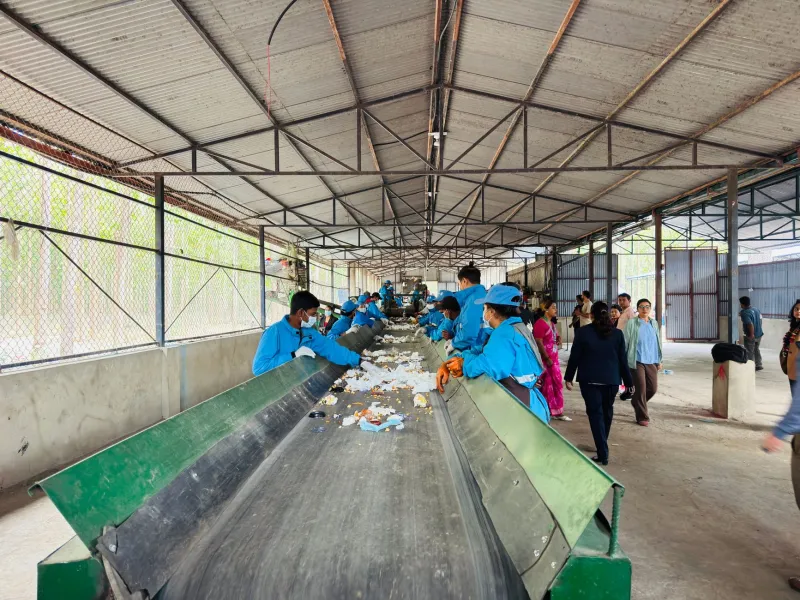
Uganda's industrial manufacturing base did not emerge from government blueprints alone. Much of it grew from the pragmatic instincts of entrepreneurs who recognized that a landlocked nation with limited import options had to learn to make things itself. Over the past fifteen years, that entrepreneurial necessity has quietly produced a cluster of manufacturers capable of delivering precision components, electrical assemblies, agro-processing equipment, and structural fabrications to regional and, increasingly, international buyers.
Companies such as Roofings Group, which began as a local steel fabricator and has since expanded into a vertically integrated metals producer, and A to Z Textile Mills, which supplies treated mosquito nets to global health programs, demonstrate that Ugandan manufacturers can meet rigorous international quality standards at scale. These are not artisanal operations. They are industrial enterprises with ISO certifications, export experience, and the organizational capacity to fulfill multi-year contracts.
For American buyers accustomed to the documentation requirements and compliance frameworks of global procurement, that institutional maturity matters enormously.
The Cost Equation Is Changing
The appeal of Asian manufacturing has always rested on a cost argument. That argument is eroding. Average manufacturing wages in China have risen sharply over the past decade, narrowing the gap with other emerging markets. Tariff regimes introduced during the US-China trade tensions of the late 2010s—and expanded under subsequent administrations—have added further friction. When procurement teams build out their total landed cost models, the arithmetic is no longer as one-sided as it once appeared.
Uganda enters this calculation with several structural advantages. Labor costs remain among the lowest in sub-Saharan Africa. The country benefits from preferential trade access to the United States through the African Growth and Opportunity Act (AGOA), which eliminates tariffs on thousands of product categories. And unlike some emerging manufacturing destinations that have become overcrowded with competing buyers, Uganda's industrial sector still offers room for anchor relationships—the kind of long-term supplier partnerships that mid-market American companies find increasingly difficult to secure in saturated markets.
The East African Community (EAC) trade framework further amplifies this advantage, giving Ugandan manufacturers seamless access to a regional market of more than 300 million consumers while simultaneously serving export demand from the West.
Geopolitical Resilience as a Product Feature
There is a dimension to Uganda's appeal that goes beyond spreadsheets. In the current global environment, supply chain geography has become a strategic variable in ways it simply was not a generation ago. American companies that source exclusively from a single region are increasingly viewed by their own boards—and by institutional investors—as carrying unacceptable concentration risk.
Uganda sits outside the principal theaters of great-power competition that have made procurement officers nervous about East Asian supply chains. The country maintains stable diplomatic relationships with both Western governments and major multilateral institutions. Its regulatory environment, while still maturing, has improved markedly in recent years, with the Uganda Investment Authority (UIA) actively streamlining the processes by which foreign companies can establish sourcing relationships or joint ventures with local manufacturers.
For a US company seeking to demonstrate supply chain resilience to a risk committee or an ESG-conscious institutional shareholder, the ability to point to a diversified sourcing footprint that includes African partners carries a narrative weight that pure cost analysis cannot fully capture.
The Entrepreneurs Driving the Shift
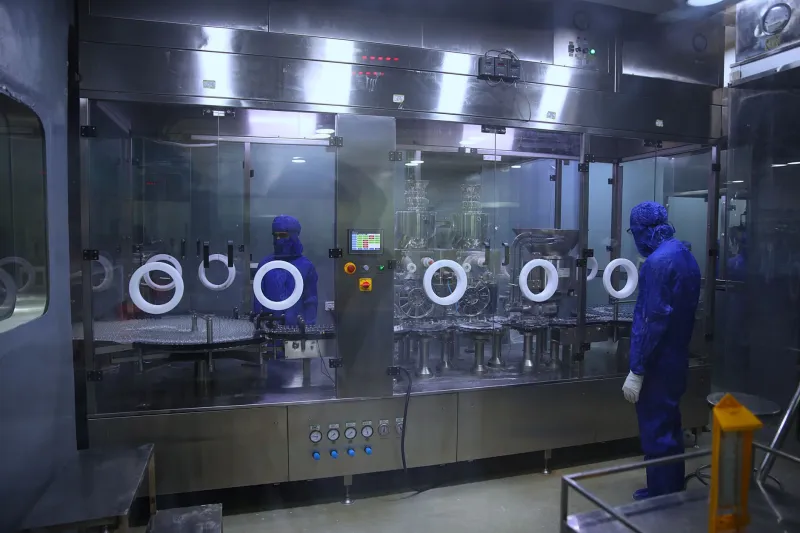
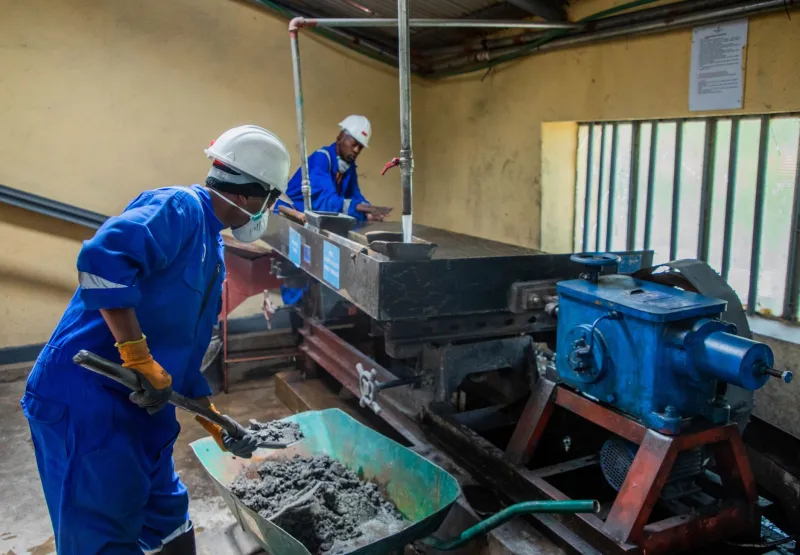
Behind the aggregate data are individual founders making calculated bets on industrial upgrading. In Kampala's Namanve Industrial Park—a purpose-built manufacturing zone that has attracted over 200 firms—entrepreneurs are investing in CNC machining capacity, automated assembly lines, and quality management systems explicitly designed to meet Western buyer standards.
One such entrepreneur is the founder of a precision fabrication firm that produces custom metal components for the construction and energy sectors. Having spent several years working with European engineering firms on regional infrastructure projects, he returned to Uganda with a clear thesis: that the country's manufacturers could compete on quality—not just cost—if they invested in the right equipment and certifications. His firm now holds contracts with buyers in three continents and is actively courting US partners in the commercial construction and renewable energy installation sectors.
This pattern—Ugandan entrepreneurs with international exposure returning to build export-oriented industrial businesses—is becoming more common. It is also producing a generation of factory owners who understand what American procurement officers need before they ever get on a call.
Logistics: The Honest Challenge
No assessment of Uganda's manufacturing potential would be complete without an honest accounting of its logistical constraints. The country is landlocked, dependent on road and rail corridors through Kenya and Tanzania to reach the port of Mombasa. Transit times to US ports are longer than those from Asian hubs, and freight costs—while improving as African logistics infrastructure develops—remain a meaningful variable in the landed cost calculation.
Ugandan manufacturers and their government partners are not blind to this challenge. Investments in the Standard Gauge Railway corridor, upgrades to Entebbe International Airport's cargo handling capacity, and the development of inland container depots are all aimed at reducing the logistical penalty that landlocked geography imposes. Progress is measurable, if incremental.
For US buyers sourcing components that are high in value relative to their weight—precision electronics, specialized fasteners, engineered textiles—the logistics calculus is more favorable than it would be for bulk commodities. And for companies that have experienced the chaos of pandemic-era container shortages or Red Sea rerouting surcharges, a longer but more predictable transit corridor sometimes looks preferable to a shorter but more volatile one.
A Third Option Whose Time Is Coming
The narrative of American manufacturing supply chains has long been written in binary terms: domestic production or Asian outsourcing. The emergence of nearshoring to Mexico and Central America introduced a third chapter. Uganda, and East Africa more broadly, is beginning to write a fourth.
It is not a story of overnight transformation. The volumes are still modest by global standards, the logistics still require patience, and the supplier relationships still demand more upfront due diligence than a buyer would need with a well-established Asian counterpart. But the fundamentals—cost competitiveness, AGOA trade access, geopolitical stability, and a growing cohort of quality-oriented industrial entrepreneurs—are aligning in ways that serious procurement professionals can no longer afford to ignore.
America's most forward-thinking supply chain teams are already making the trip to Namanve. The question is whether their competitors will wait until the advantage is obvious, or move while it still belongs to the early movers.